
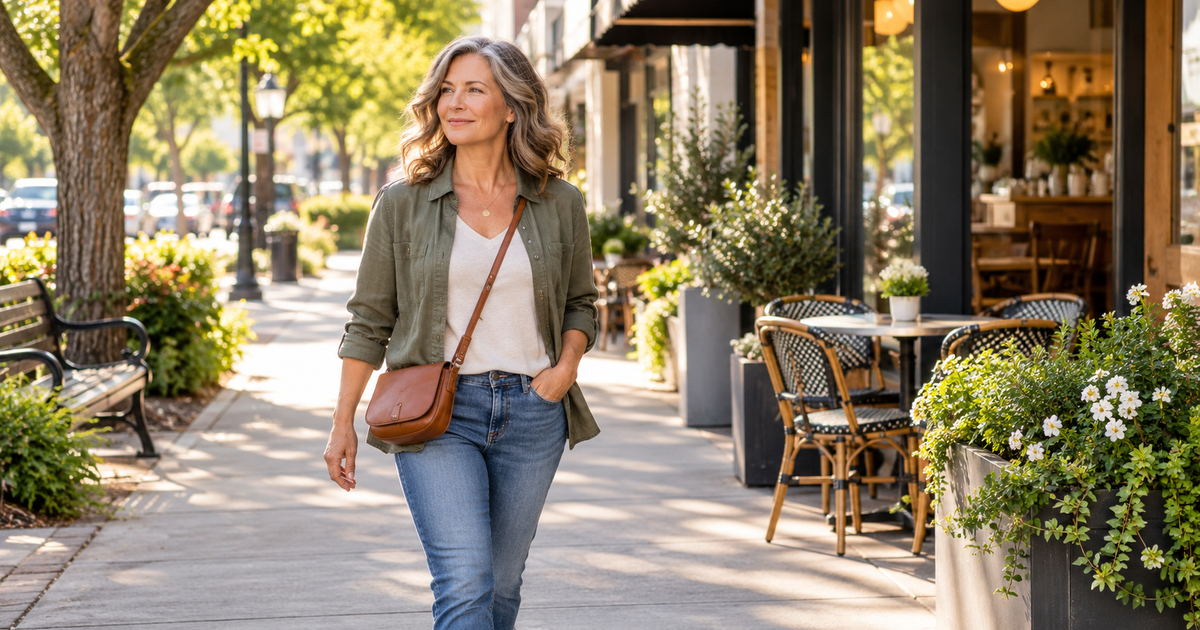
Preparedness without paranoia means building useful awareness, simple plans, and practical skills while leaving room to enjoy your life. You can notice your surroundings, respect your boundaries, and choose a sensible next step without treating every unfamiliar situation as dangerous.
For women seeking greater independence or renewed self-trust, that balance matters. Preparation should support the things you want to do: travel, meet friends, run errands, and move through ordinary days with confidence.
Start with one useful question: “What would help me make a clearer decision here?” The answer is usually more manageable than imagining everything that could go wrong.
What preparedness without paranoia looks like
Practical preparedness connects a real situation with an action you can take. Before an outing, you might confirm transportation, charge your phone, and decide where to meet a friend if you become separated. Once those details are settled, you can return your attention to the outing.
A helpful plan has a purpose and a stopping point. Repeatedly checking the same information without learning anything new can consume time without improving the plan.
Here, “without paranoia” describes the brand’s calm approach to preparation. It is not a clinical label for someone who feels afraid. Feeling uncertain deserves understanding, and confidence does not require pretending that uncertainty disappears.
Begin with your actual routine for preparedness without paranoia
Choose one part of daily life where you would appreciate more clarity. Perhaps you dislike arriving somewhere unfamiliar, feel rushed walking to your car, or struggle to end an uncomfortable conversation.
Describe the difficulty precisely. “I want to know my transportation options before dinner” gives you something concrete to arrange. “I need to be ready for anything” gives you an endless assignment.
Then choose a small improvement:
- Save the address before leaving.
- Confirm your ride home.
- Keep essential items easy to reach.
- Identify someone you can contact if plans change.
- Allow enough time to avoid making every decision in a rush.
Preparedness for everyday life should fit your responsibilities, energy, and mobility. A useful routine remains workable on an ordinary tired day.
Preparedness without paranoia: Practice awareness that leads somewhere
Situational awareness means noticing relevant details around you and using them to inform your choices. You are looking for information that changes what you need to do.
At a restaurant, that could mean noticing the entrance and where staff are available. During a walk, it could mean putting your phone away while crossing a busy driveway. At an event, it could mean agreeing on a meeting place with your companion.
These situational awareness tips have a limited task. Notice what matters, make any needed adjustment, and continue with your activity.
Pay attention to behavior and context. Repeatedly ignoring a stated boundary provides information about an interaction. Someone’s appearance or unfamiliarity alone does not establish harmful intent.
Use a simple notice, choose, continue routine
Try this everyday practice as a starting point for clearer decisions:
- Notice: What has changed, and what do I actually know?
- Choose: Which available action addresses the concern?
- Continue: After acting, return to your plans or reassess if new information appears.
Imagine arriving at a cafe and discovering that your planned ride home is unavailable. You notice the transportation problem, arrange another option from inside, and continue your visit once the details are confirmed.
You have addressed a specific concern without turning the entire evening into a safety exercise. This is an illustrative routine, not a guarantee of safety or a substitute for instruction. Adapt it to the circumstances rather than treating it as a rigid rule.
Give yourself permission to set boundaries using Preparedness without paranoia
Preparedness includes deciding what you are comfortable with before someone asks you to decide quickly. You can decline a request, change a plan, or end a conversation without constructing a lengthy defense.
Choose language you can realistically use:
- “No, thank you.”
- “I’m keeping that information private.”
- “I’m leaving now.”
- “I need some space.”
Practice saying one sentence aloud in a comfortable setting. Notice whether it sounds like something you would actually say. Revise it until the words feel clear and usable.
A boundary does not require an accusation. You can protect your time, privacy, or personal space while remaining uncertain about another person’s intentions. If speaking could increase immediate danger, prioritize getting to safety and seeking help.
Make plans that respect your needs
A plan should reflect your circumstances. Consider walking distance, accessibility, fatigue, caregiving responsibilities, and whether you are traveling alone or with others.
For example, an evening out in Las Vegas might involve checking the pickup location and choosing a meeting point before entering a busy venue. This is an ordinary planning example, not a claim that the location is unusually dangerous.
For broader household preparation, the Clark County Emergency Management Agency’s planning guidance recommends planning how to communicate with loved ones during a disaster. Keep that task separate from the arrangements for a routine outing. Prepare for the situation in front of you. Different needs deserve different plans.
Preparedness without paranoia: Build confidence under pressure through manageable practice
Confidence under pressure can begin with becoming familiar with small decisions. Choose a low-pressure exercise with a clear end: locate a meeting point, rehearse a boundary sentence, or review a backup transportation option.
Afterward, ask:
- Did I understand the task?
- Could I carry out my chosen action?
- What would make it easier next time?
Keep the review specific and fair. Forgetting a detail gives you something to improve. It does not define your capability.
For decision-making under pressure that involves more complex situations, seek structured instruction with clear expectations and appropriate supervision. An article can introduce a useful idea, but reading alone cannot establish how you will perform in a stressful event.
Preparedness without paranoia: Know when preparation is enough
Before starting a planning task, decide what completion looks like. For a simple outing, that might mean knowing the destination, arranging transportation, and having a way to contact someone.
Once those tasks are complete, give yourself permission to stop reviewing them unless circumstances change.
Notice whether your preparation helps you participate in life or keeps expanding into more checking and avoidance. That observation is useful feedback, not a reason to criticize yourself.
The National Institute of Mental Health explains that anxiety disorders involve more than occasional worry and can interfere with daily activities. If persistent fear disrupts sleep, relationships, or ordinary routines, speak with a qualified health professional. Preparedness education is not mental health treatment.
Preparedness without paranoia: Choose education that supports confidence for women
Look for a program that explains its audience, learning goals, prerequisites, and teaching approach. Ask what beginners can expect, how practice is supervised, and how the instruction accommodates questions or individual needs.
Be cautious about promises that any class will make you fearless or guarantee a particular outcome. Useful education should give you a clearer understanding of skills, choices, and limits.
Wendy Jay Training’s Girl Power program focuses on situational awareness, practical personal safety, and decision-making. Its calm, structured approach aligns with women who want an approachable starting point for preparedness education.
Choose the pathway that fits your current goals rather than assuming that more advanced instruction is always the appropriate next step.
For your first week, pick a single habit and attach it to something you already do. Before leaving home, check the details most relevant to that day’s plans. At the end of the week, keep what helped and simplify what felt cumbersome. You are building a routine you can sustain, one adjustment at a time.
Frequently asked questions
Can I become prepared if I still feel nervous?
Yes. You can learn a route, arrange transportation, or practice a boundary while feeling nervous. Treat confidence as something you develop through useful actions. You do not have to meet an emotional standard before beginning.
Does trusting my instincts mean assuming I am right?
No. Discomfort can be a reason to pause, seek more information, create space, or leave. It is not proof of someone else’s intentions. Choose a proportionate action while remaining open to new information.
Do I need a firearm to begin preparedness education?
No. Everyday planning, situational awareness, boundaries, and communication are useful starting points on their own. If firearm education becomes a separate goal, seek appropriate instruction and understand the responsibilities involved.
How can I tell whether I am making progress?
Look for observable changes: you can describe your plan, identify an alternative, communicate a boundary, or finish a preparation task and move on. Progress can be modest and still meaningful. Compare your current habits with your own starting point.
Preparedness without paranoia: Take one practical step toward calm confidence
Preparedness without paranoia starts with a manageable action that supports your life. Choose one routine, clarify one uncertainty, and practice one decision. Let the preparation serve the experience you want to have.
Wendy Jay Training helps women build confidence, awareness, and practical readiness through calm education. If you would like help choosing a starting point, contact Wendy Jay Training to discuss your goals and explore the appropriate next step.