
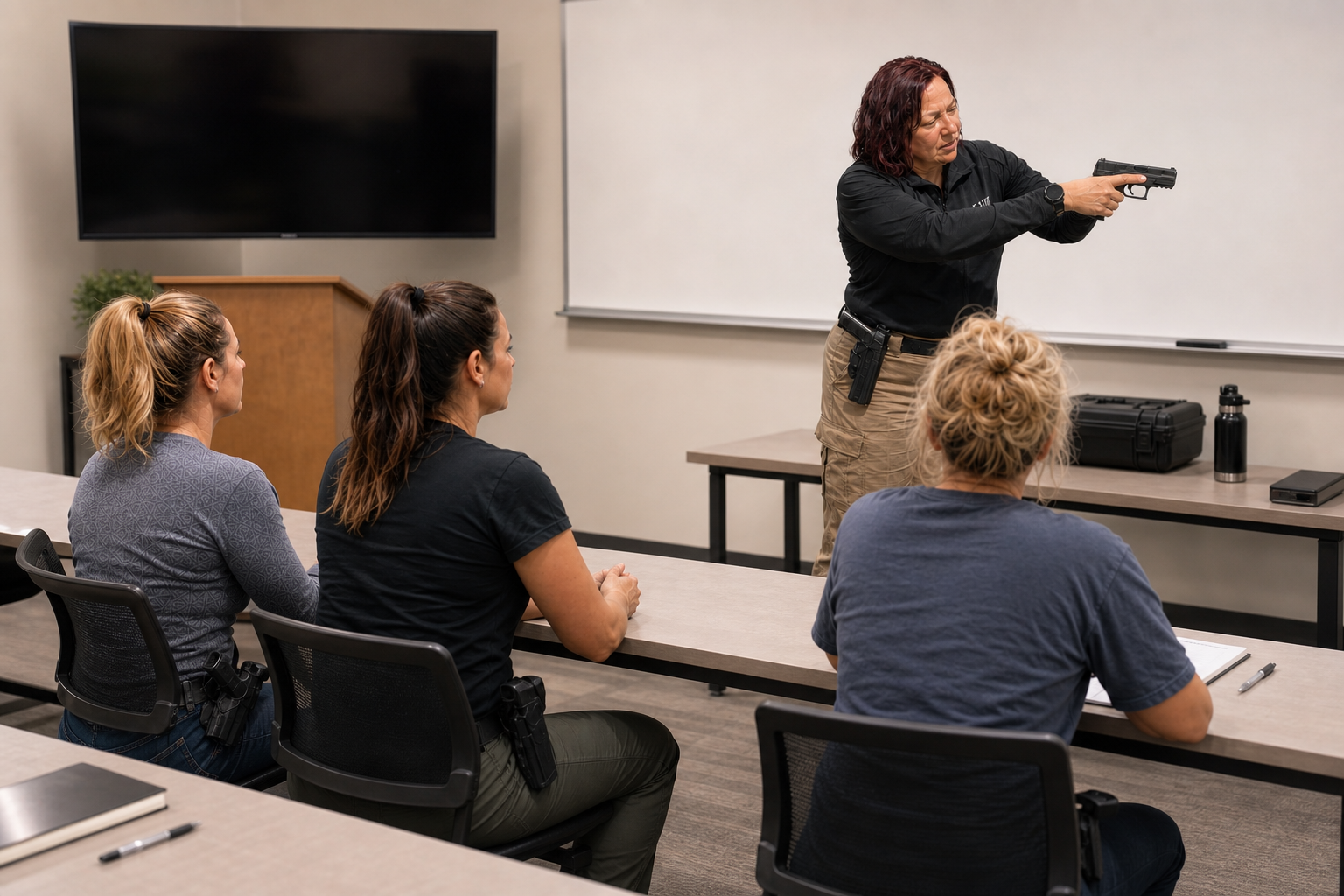
For many women, the moment something feels wrong does not usually come out of nowhere. There is often a small shift first. A change in someone’s behavior, or a person standing too close. A strange feeling in a parking lot, or a sense that a conversation has turned uncomfortable. A hesitation that appears before the mind can fully explain why. That is where situational awareness for women becomes so important.
Awareness is not about living in fear. It is not about assuming every person or place is unsafe. It is about learning how to notice what matters sooner, trust your instincts, and make clear decisions before pressure builds. For women in Las Vegas, Summerlin, Spring Valley, Henderson, North Las Vegas, and throughout Southern Nevada, these skills can support everyday confidence in real places, not just extreme scenarios.
Wendy Jay Training includes situational awareness, built around a simple but powerful idea: confidence is easier to access when women have been taught what to notice, how to interpret changes, and how to respond with calm clarity. Most women have been told to “be aware,” but few have been shown what awareness actually looks like in daily life.
This guide breaks down practical situational awareness tips, real-world awareness habits, and ways of recognizing warning signs before a situation becomes harder to manage.
What Situational Awareness for Women Really Means
Situational awareness for women means understanding what is happening around you, recognizing when something changes, and knowing how to make a better first decision. It is not just about looking around or scanning a room. True awareness includes observation, intuition, emotional composure, and practical decision-making.
For women, this kind of awareness often needs to address real-life experiences such as walking alone to a car, moving through crowded public spaces, traveling, managing unwanted attention, setting boundaries, or noticing behavior that feels uncomfortable. Good awareness is not anxiousness, it should be calm and informed.
It helps you ask simple questions:
- What is normal in this environment?
- What has changed?
- Who is moving toward me and why?
- Where are my exits or safer pathways?
- Am I distracted when I need to be present?
- What is my next best decision?
These questions help turn vague discomfort into useful information. That is the foundation of Wendy Jay Training for situational awareness and practical preparedness.
Why Awareness Matters Before Something Feels Wrong
By the time something feels obviously wrong, options may already be reduced. That is why early awareness matters. The earlier a woman notices a change, the more choices she may have.
- She may be able to leave sooner.
- She may be able to create space.
- She may be able to move toward other people.
- She may be able to use her voice.
- She may be able to avoid walking into a situation that already feels off.
This is one of the most valuable awareness tips for women: do not wait until discomfort becomes proof. Discomfort is information. It does not always mean danger, but it does deserve attention.
Many women dismiss early signals because they do not want to seem rude, dramatic, judgmental, or overly cautious. But recognizing warning signs does not mean assuming the worst. It means allowing yourself to notice what is happening and choose a response that keeps you be more in control.
Awareness Is a Confidence Skill
Confidence does not always begin with feeling fearless. Often, it begins with knowing what to pay attention to. When women or anyone understands their environment, they tend to feel more grounded. They are not relying only on hope or reaction. They have a process. They know how to notice patterns, identify options, and move with purpose.
This is why situational awareness for women is closely connected to confidence, preparedness, and emotional composure. A woman who knows what to look for may feel more capable walking through a parking lot, entering a busy restaurant, attending an evening event, or navigating a public space.
For women across Las Vegas and Southern Nevada, this can apply to everyday routines such as shopping, meeting friends, attending appointments, going to the gym, leaving work, or heading home after dark. Awareness is not reserved for high-risk moments. It is a practical skill for everyday life.
Situational Awareness Tips for Everyday Life
The most useful situational awareness tips are simple enough to use consistently. Awareness should not feel overwhelming. It should become a natural part of how you move through the world.
1. Notice transitions
Transitions are moments when attention often drops. Getting in or out of a car, walking from a store to a parking lot, waiting for a rideshare, entering an elevator, or moving from a busy space to a quiet one are all examples. During transitions, pause for a second and look around before shifting your attention to your phone, keys, or bags.
2. Identify exits and pathways
When you enter a restaurant, gym, store, event space, or public building, take a moment to notice exits and open pathways. You do not need to obsess over them. Just know where they are. This simple habit can help you feel more oriented and less reactive if something changes.
3. Watch behavior, not appearance
One of the most important awareness tips for women is to focus on behavior rather than assumptions. Warning signs are often connected to actions, not appearances. Notice if someone is following too closely, ignoring personal space, watching people instead of engaging with the environment, blocking movement, creating distraction, or repeatedly showing up in your path.
4. Reduce phone distraction in public spaces
Phones are useful, but they can also pull your attention away during moments when you need awareness. Parking lots, sidewalks, gas stations, rideshare pickup areas, and public entrances are not ideal times to be fully absorbed in a screen. You can still use your phone. Just avoid letting it become your only focus.
5. Trust the feeling that tells you to adjust
If something feels off, you are allowed to adjust. You can change direction, slow down, speed up, move closer to people, return inside, ask for assistance, or leave. You do not need to justify every decision to yourself or anyone else.
Recognizing Warning Signs Without Becoming Fearful
Recognizing warning signs is not about labeling every uncomfortable person as dangerous. It is about learning to notice behavior that deserves attention.
Some warning signs may include:
- Someone matching your pace without clear reason
- A person standing too close despite available space
- Someone ignoring a clear boundary
- A stranger trying to isolate you from others
- A person creating urgency or pressure
- Someone watching you too closely in a transitional space
- A person blocking your path or limiting movement
- Behavior that does not match the setting
- A conversation that shifts from friendly to controlling
- A feeling that your attention is being deliberately distracted
These signs do not always mean something harmful will happen. But they may signal that it is time to pay closer attention, create distance, or change your plan. This is the difference between fear and awareness. Fear says, “Panic.” Awareness says, “Notice, assess, and choose.”
Awareness Habits That Build Calm Confidence
Strong awareness habits are built through repetition. The goal is to make awareness feel natural instead of forced.
A few practical habits include:
- Before leaving a building, glance outside and notice the area.
- Before getting out of your car, look around your immediate surroundings.
- When walking, keep your head up and your hands available.
- When entering a new space, identify exits and populated areas.
- When something feels off, create space sooner rather than later.
- When someone crosses a boundary, practice using clear language.
- When traveling, plan arrival, parking, and exit details in advance.
- When alone, avoid looking distracted or unsure for long periods.
These habits support situational awareness for women because they give the mind something specific to do. Instead of worrying vaguely, you are practicing purposeful attention. Over time, these habits can help women feel calmer and more confident in spaces that once felt uncertain.
Why Women Often Ignore Early Signals
Many women have been taught to be polite, accommodating, and understanding. These qualities can be strengths, but they can also make it harder to respond when something feels wrong.
A woman may notice a warning sign and immediately explain it away. She may think:
- I am probably overreacting.
- I do not want to be rude.
- Maybe I misunderstood.
- I should give them the benefit of the doubt.
- I do not want to make a scene.
This is why Wendy Jay situational awareness places so much emphasis on trusting yourself. Awareness is not just a visual skill. It is an internal skill. It asks women to respect what they notice, even when the signal is subtle.
- You can be kind and still have boundaries.
- You can be calm and still leave.
- You can be polite and still create distance.
- You can be thoughtful and still trust your instincts.
Situational Awareness in Las Vegas
Las Vegas has unique environments that make awareness especially valuable. Throughout the greater Las Vegas area, women may move between neighborhood spaces, busy roads, shopping centers, restaurants, parking lots, casinos, event venues, airports, and entertainment districts. Each environment has its own rhythm.
- A grocery store parking lot feels different from a hotel lobby.
- A quiet sidewalk feels different from a crowded event.
- A daytime errand feels different from leaving a restaurant at night.
- A familiar area feels different when you are distracted, tired, or alone.
That is why local awareness training matters. Situational awareness for women should reflect the actual places women move through. Practical training helps women think about real-world environments instead of abstract safety advice.
How Wendy Jay Training for situational awareness Helps
Wendy Jay Training for situational awareness is designed to help women build confidence, preparedness, and practical awareness without fear-based pressure. The approach is calm, structured, and beginner-friendly.
The goal is not to overwhelm women with worst-case scenarios. The goal is to help them understand what to notice, how to trust their instincts, and how to make confident first decisions.
This training can help women develop:
- Practical awareness habits
- Confidence in public spaces
- Stronger boundary recognition
- Better decision-making under pressure
- Emotional composure in uncomfortable moments
- A clearer understanding of warning signs
- Preparedness without paranoia
- Trust in their own instincts
For many women, this kind of training creates a powerful shift. They stop waiting for permission to respond. They begin to understand that early action can be calm, measured, and appropriate.
The First Decision Is Often the Most Important
When something feels off, the first decision matters. That decision may be small. It may be to look up from your phone. It may be to cross the street. It may be to go back inside. It may be to say, “No, thank you.” It may be to ask an employee to walk you out. It may be to call someone before walking to your car. Small decisions can create space, time, and options.
This is why situational awareness tips are not just about observation. They are about action. Awareness without action can still lead to hesitation. Awareness with a decision helps women move with more confidence.
Frequently Asked Questions About Situational Awareness for Women
What is situational awareness for women?
Situational awareness for women is the ability to notice surroundings, recognize behavioral or environmental changes, trust instincts, and make clear decisions before a situation escalates.
What are the most important situational awareness tips?
The most important situational awareness tips include reducing distractions, noticing exits, watching behavior, paying attention during transitions, trusting discomfort, and creating space when something feels off.
How can women recognize warning signs earlier?
Recognizing warning signs starts by noticing behavior changes, boundary crossing, unusual movement patterns, pressure, distraction tactics, and situations that do not match the environment.
What awareness habits help women feel more confident?
Helpful awareness habits include looking around before leaving a building, keeping your phone from becoming a distraction, identifying exits, walking with purpose, and giving yourself permission to adjust when something feels wrong.
Where can women find situational awareness training in Las Vegas?
Women in Las Vegas, Summerlin, Henderson, North Las Vegas, Spring Valley, and Southern Nevada can explore Wendy Jay Training for situational awareness for calm, practical, women-centered preparedness education.
Start Building Awareness Before the Moment Happens
Confidence begins before the moment happens. It begins when women learn to notice what matters, trust what they feel, and make decisions with clarity.
Situational awareness for women is not about fear. It is about freedom, preparedness, and calm confidence. It helps women move through everyday life with more intention, whether they are walking to their car, traveling alone, shopping in Las Vegas, attending an event, or navigating a busy public space.
With Wendy Jay Training for situational awareness, women in Las Vegas can build practical awareness habits, learn useful awareness tips for women, and become more confident in recognizing warning signs before a situation feels overwhelming.
If you are ready to feel more aware, prepared, and grounded, Wendy Jay Training offers a supportive place to begin. Start with awareness, build confidence through practice, and learn how to trust yourself before pressure ever appears.
situational awareness for women: Practical Resources
situational awareness for women supports calm awareness, practical preparation, and clearer decisions in everyday situations.

Continue building practical skills through our awareness training for women. For broader planning guidance, explore Ready.gov preparedness resources.